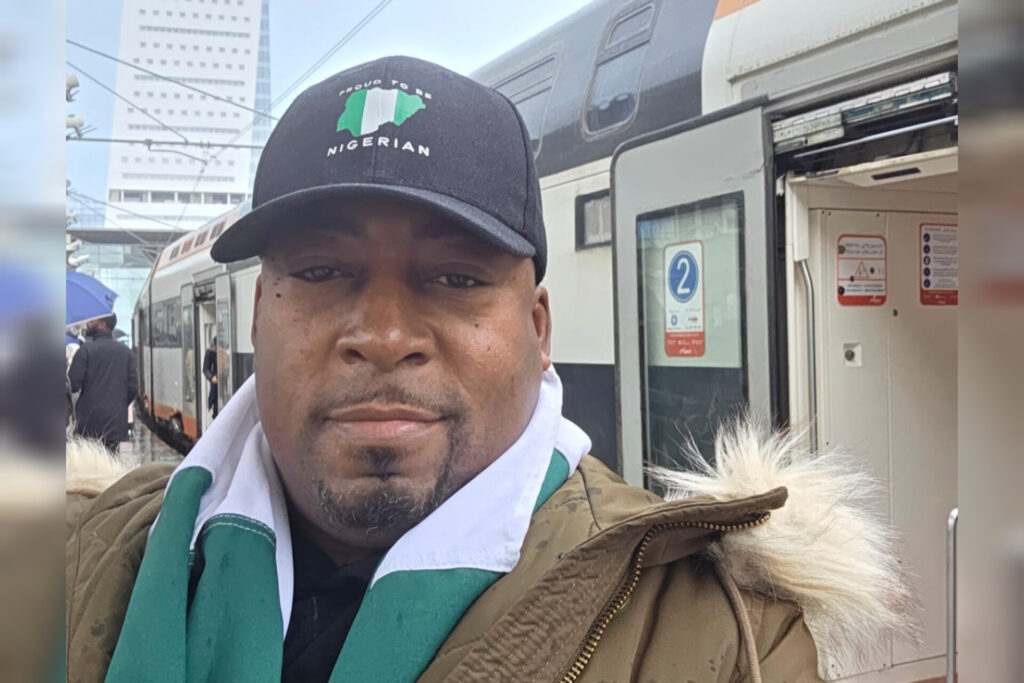
AFCON 2026 Nigeria vs Morocco continued beyond the pitch as I traveled from Rabat to Casablanca to watch the third-place match. While bronze may not be gold, it is certainly better than nothing, and this journey offered deeper insight into Morocco’s growth, governance, and infrastructure development.
The last time I made this trip was in February 2018, when Nigeria’s CHAN Eagles lost 4–0 to Morocco in the final. Back then, I boarded an old, rickety diesel locomotive running on standard gauge rail. At the time, Morocco’s electric high-speed rail line was still under construction and would only be completed in November 2018.
High-Speed Rail Experience: Rabat to Casablanca
Today’s experience was a complete contrast. I traveled first class on a double-decker electric high-speed train from Rabat to Casablanca. The journey was smooth, fast, and remarkably efficient—an impressive demonstration of modern transport infrastructure.
I tip my hat to Morocco for the scale of development achieved in just a few years. This is what purposeful governance looks like, even within the structure of a constitutional monarchy led by His Majesty King Mohammed VI.
Governance, Stability, and Public Dissent
I remember seeing protests in Rabat years ago—workers demanding political reforms and protesting perceived oppression. State security responded swiftly, removing protesters and clearing all signs of unrest almost immediately.
Even with improved infrastructure, higher living standards, and a stronger economy, people will always find reasons to protest—let alone in a country like Nigeria where challenges are far more visible.
Nigeria vs Morocco: A Country Comparison
Nigeria vs Morocco – Key Indicators
Population: Nigeria 242m | Morocco 38m
GDP: Nigeria $285bn | Morocco $179bn
Power Capacity: Nigeria 13GW | Morocco 12GW(Nigeria’s average available power is just 5.1GW)
Nigeria remains Africa’s largest, resource-driven economy and is still seeking diversification. Morocco, though smaller, is more technologically developed and has outpaced Nigeria in infrastructure, diversification, and per-capita wealth, which is nearly four times higher than Nigeria’s.
Morocco’s Openness and Regional Influence
Morocco operates an open economy that welcomes foreigners for tourism, education, and employment. There is a significant Nigerian population here, many of whom are thriving.
Morocco has also sought to join ECOWAS, though its bid has been stalled due to its continued control of Western Sahara. If admitted, Morocco could become a major lynchpin in African free trade, especially as ECOWAS reshapes without Mali, Niger, and Burkina Faso.
Lessons for Nigeria and AFCON Final Thoughts
There is much Nigeria can learn from “little Morocco”: logistics management, agricultural systems, infrastructure planning, tourism development, and security coordination. Morocco is clearly preparing for the future, including its role as a joint host of the 2030 FIFA World Cup alongside Spain and Portugal, as confirmed by FIFA and supported by CAF.
After waiting 50 years since their last AFCON victory, a Morocco triumph at AFCON 2026 would feel fitting given their preparation and ambition.
While I wish Morocco well in the final, I’m quietly backing Senegal—our West African brothers. That said, I’ll keep that opinion low-key so as not to upset my gracious hosts 😄😂.
What’s your view? Please share your thoughts.
Femi Oke Betta9ja